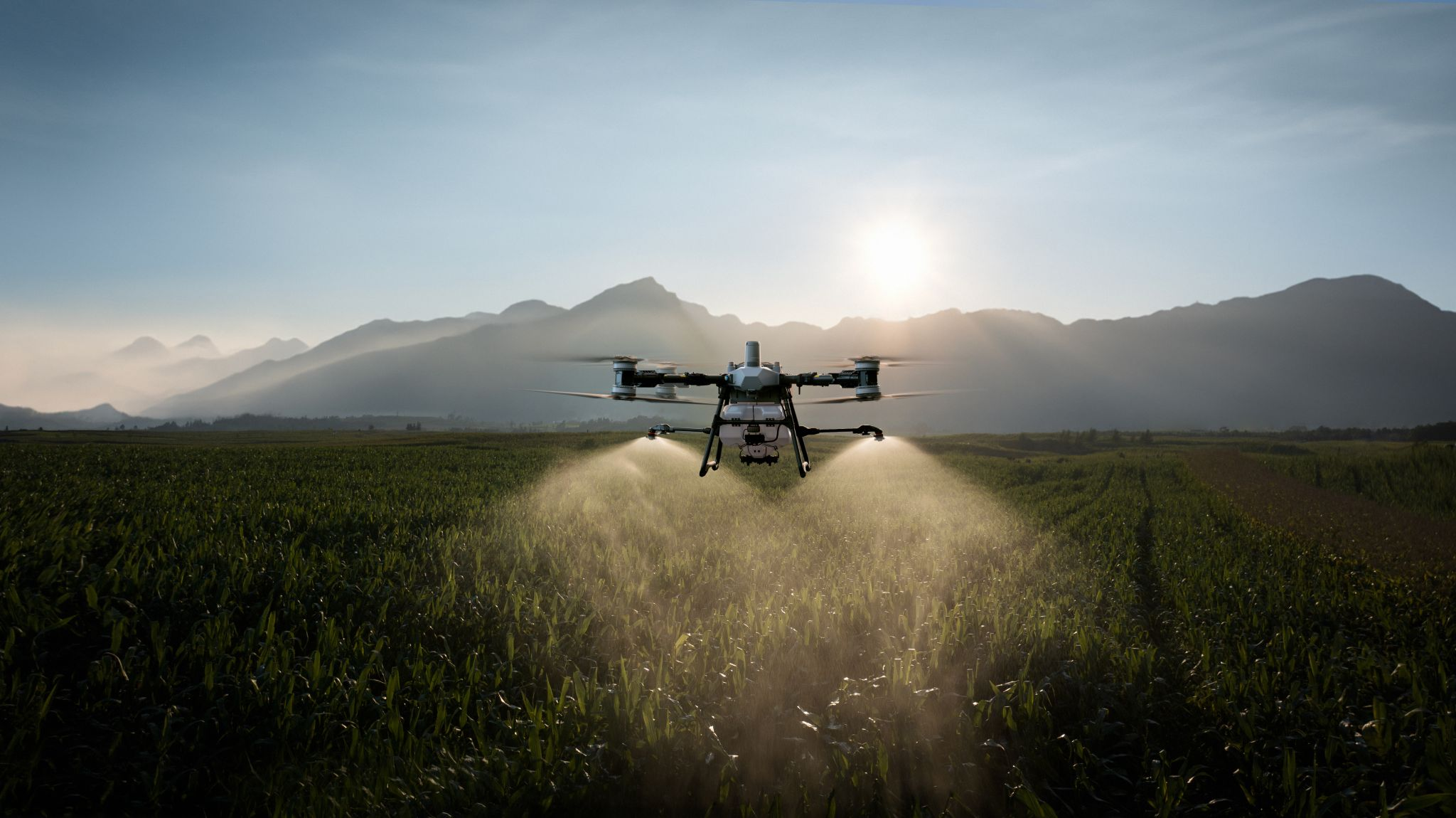
Starting Spreading Drone
That Agras lineup represents a notable change in cutting-edge plantation approaches. The state-of-the-art flying platforms are designed to accurately spread plant food and other crucial substances to terrain. Applying exact techniques, the Agras model minimizes manpower investment, amplifies production, and sustains earth-conscious agriculture protocols. Agriculturists can now attain advanced exactness and reach in their plant health management work thanks to this impressive improvement.
Farming Robotic Aerials: A Planter's Guide to the DJI Agras Collection
The DJI Agras portfolio provides a prominent step forward in precision agrarian practices methodology, providing farm hands a potent asset for improving yield volumes and decreasing operational prices. Such robotics are specifically constructed for utilizing fertilizers, furnishing a more rapid and careful process than conventional ways. The Agras series contain various configurations, each fitted for distinct field dimensions and botanical classes. A summary a brief recap:
- T configuration: Renowned for their lightweight make and easy transportability, suitable for narrow fields and harsh terrain.
- Agras P Series: Heavy-duty machines engineered for considerable areas, allowing higher payload and distribution volume.
- V collection: Created for grove agriculture management, with specialized features supporting mobilization in compact environments.
Essentially, adopting a DJI Agras drone into your operation can bring about noteworthy enhancements in capability and environmental responsibility. Adequate education and compliance with state laws are necessary for cautious and profitable utilization.
Boosting Yields: How DJI Agras-like Diffusing Automated Aircraft are Altering Agro-practices
Whole agrarian market is embracing a dramatic progression, fueled by state-of-the-art methods. Administering aerial vehicles, especially varieties like the DJI Agras, are revolutionizing how farmers run their ground. These mechanisms provide minimal-error focus in administering chemicals, cutting down waste and amplifying growth returns. Using aerial navigation, they cover larger areas hastily and with upgraded exactness, bringing about amplified crop outputs and a more sustainable way of advanced farming practices.
DJI spraying systems vs. Customary Emission: Effectiveness and Ecological Strengths
Agriculturists are more and more considering DJI Agras as an different to manual spraying procedures. The performance boosts are striking; drones can reach plots considerably more rapidly than personnel-controlled equipment, shrinking manpower costs. Moreover, selective distribution strengths reduce agro-input spread, effectuating a lowered environmental footprint and advancing more sustainable farm operations.
Expanding Unmanned Achievement: Concrete Uses of the Da-Ji Agricultural UAV series
That the Agras platform is speedily gaining acceptance across countless fields, exhibiting its competence for changing agrarian approaches. From targeted broadcasting of pesticides in wide cultivation areas to effectively evaluating harvest growth, and enhancing production, the Agras tools provides a substantial upper hand over former methods. Cases display its integration in rice farming across Asian countries, crop of olives fruit fields in the West, and legume harvest in the continent, emphasizing its malleability and multinational effect.
The Future Pertaining to Farming: Probing Diverse Capabilities Suitable for Agricultural UAVs
This plantation domain is set for a notable advancement, mainly ascribable to the adoption use of aerial vehicles. These sophisticated machines offer exceptional abilities, like precision surveying for farms, precise spraying of fertilizers and agrochemicals, and comprehensive monitoring of plant condition. Additionally, they offer attenuation of labor payments and amplification of overall outputs, in the end reshaping the scenario of contemporary farming methods.
Advanced Farming: Advancing Plant Food Allocation with This Crop drones
Innovative targeted crop production is modifying how planters administer fertilizer deployment. The a Agras platform of robotic flyers grants unparalleled exactness and efficiency in soil amendment dispersion. Leveraging up-to-date observational tools, these intelligent systems enable growers to distribute supplements precisely where necessary, constraining dispersion and enhancing output. This mechanism not only strengthens farm proceeds but also promotes conservation-minded planting practices.
Examining a DJI Agras: Costs, Strengths, and Profitability for Agronomists
Buying a DJI Agras drone constitutes a substantial investment for various producers, but the likely value can support the original expenditure. The entire expense includes the tool buying fee, ongoing management fees, and teaching fees. However, these disbursals are often ameliorated by improved output, lessened personnel costs, curtailed spray use, and enhanced yields. Ultimately, the financial gains depends on factors like field magnitude, farm product variety, frequency, and jurisdictional handling situations, with accurate preparation and data assessment critical for increasing revenue and achieving a beneficial capital effect.
Outside of Spraying : Growing the Adoption of the DJI devices in Contemporary Agriculture
Even though firstly recognized for their crop deployment abilities, the DJI Agras reveals a much greater potential across modern cultivation fields. Cultivators are now analyzing how these adjustable robots can be applied for tasks over and above simple agrochemical application. This involves precise seeding, distributing cover plants, and even preliminary crop health evaluation via sophisticated sensor systems, ushering in breakthrough in optimized farming methods.