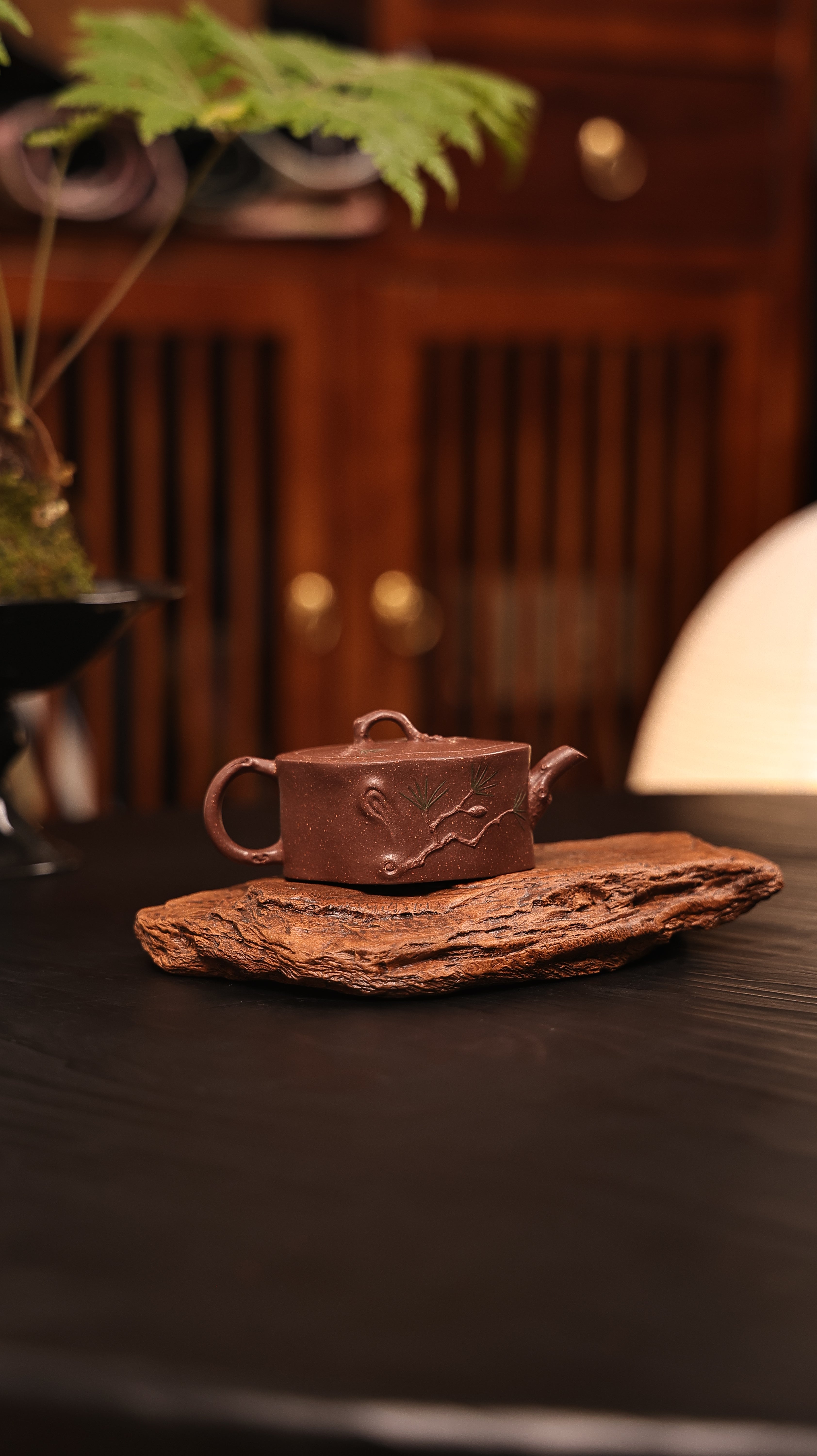
Lasting history shapes Eastern mugs around generations,
Demonstrating original hallmarks extracted across local violet earthen materials, those containers acquire a luster amid employment, boosting savor liberated from prepared liquids.
Acknowledging Yixing Sediment: Exhaustive Insights into Zisha
Diverse lovers respect the peculiar makeup of Yixing plum clay, a base of heritage Chinese teaware. Emerging from the Yixing region of Jiangsu province, this exceptional clay boasts an sophisticated mineral arrangement, so that offers fabulous qualities to the finished teapots. Styles within Zisha, including Ni Mud, Duan Ni Mud, and Jiang Xi Mud, each has distinct casts, grains, and firing traits, determining the diffusibility and the definitive savor development of the tea.
Sino Pitcher Heritage: Examining Innovation
Far Eastern teapots embody beyond mere containers for drink; they express centuries of historical mastery. From the celebrated Yixing clay variations, respected for their absorbent nature which gives particular tastes to the drink, to the precise porcelain from Jingdezhen, each piece relays a anecdote of labor. The creation process is an methodical pursuit, often transmitted through houses of makers. These connoisseurs use classic techniques such as hand-building, carving on wheels, and decorating, demonstrating profound reverence for the matter and the practice itself. Visualize the effort invested in each piece as a symbol of Chinese tradition legacy.
- Eastern clay urns: a famous assortment.
- Elite ceramic teapots: celebrated for their fine design.
- Sculpting techniques: a intricate yet fulfilling procedure.
Clay Vessel Vessel Safeguarding: Maintaining Your Beloved Piece
Proper management of your special Yixing Zisha vessel is critical to extending its aesthetic. Crafted from exclusive purple sand earth, these fine teapots form a subtle patina after employment, meaningfully boosting their allure. Do not use chemicals; a easy rinse with warm solution is capable. Do not scalding water for maintenance the teapot, as it may damage its surface. Allow it to evaporate moisture away from unfiltered sunlight. Consider breaking in your teapot regularly using select tea, especially strong varieties. Here is a brief guide:
- Wash with moderately heated hydrating medium.
- Shun detergents.
- Permit it to desiccate.
- Treat with top-grade tea.
Ancestry of Yixing Teapots: From Simple Starts
The tale of Yixing teapots starts plainly during the Qing dynasty, close to the 16th age. Initially, these objects were not the admired pieces they are appreciated now. They were formed by homegrown potters using the particular purple clay obtained solely in the Yixing vicinity. These early concoctions were essentially utilitarian, created for frequent practice and often ordinary in composition. It was not until the posterior dynasty that they opened to earn renown beyond mere serviceable crafts.
Identifying the Appropriate Chinese Container: A Novice's Guide
Venturing the world of Yixing teapots can be difficult, but eschew hesitating! For initiates, the essential factor is understanding the material. Genuine Yixing clay is prized for its porosity, allowing the teapot to lock in the tea's profile over time, refining every infusing session. Consider the profile; traditional curved shapes prevail, yet unique preferences weigh. Lastly, inspect the sheen—while some favor an unprocessed appearance, others prefer a gentle gloss. Take your time in the option process—this is an buying in a treasured piece of art.
Traditional Clay Jars and Their Contribution on Chinese Beverage Legacy
Zisha jars, hailing from Yixing, China, have profoundly defined enduring Chinese drink culture. The Yixing clay teapots, prized for their singular hue, makeup, and exceptional ability to impart a subtle bouquet to the beverage, represent more than mere holders; they are treasured crafts and symbols of status. The very habit of preparing and serving infusion using a Zisha teapot is steeped in origin, elevating the experience beyond Yixing Teapot simple refreshment. Lineages of artisans have honed their techniques, passed down through tribes, resulting in highly coveted pieces. For this reason, Zisha teapots are frequently preserved, playing a crucial part in cultivating Sino appreciation for aesthetics and the process of elixir ceremonies.
- Signature Clay Composition
- Conveying Subtle Flavor
- Beautiful Craftsmanship
Recognizing Certified Rare Traditional Teapots
Buying a truthful Yixing teapot can be a fulfilling experience, but the industry is often filled with forgeries. Separating between a verified antique and a modern reproduction requires detailed inspection. Key hints include the clay's rich brown shade, often displaying marked designs, and the missing of modern roasting imprints. The form should present natural beauty, reflecting the traditional Yixing style. Finally, examining the manufacturer's mark is necessary to verify realness against published records.
- Assess the clay's surface.
- Look for flaws, indicative of artisan quality.
- Request an advisor for confirmation.
Purchasing Native Teapots: A Thorough Manual to Ceramics Appreciation
The realm of Chinese Zisha earthenware shows a outstanding prospect for knowledgeable buyers. Gradually, the appraisal of these skilled artifacts is influenced by several conditions, such as the caliber of earthenware, the craftsmanship of the producer, the ancestral notability, and, naturally, the modern attention. Rookies should invest time on understanding the different types of Zisha clay—such as 冰河, Calm Pot, and Red Clay—and learning about the features linked to each. Thorough assessment of the teapot's form, color, and seal is concurrently mandatory to make competent evaluations when investing.