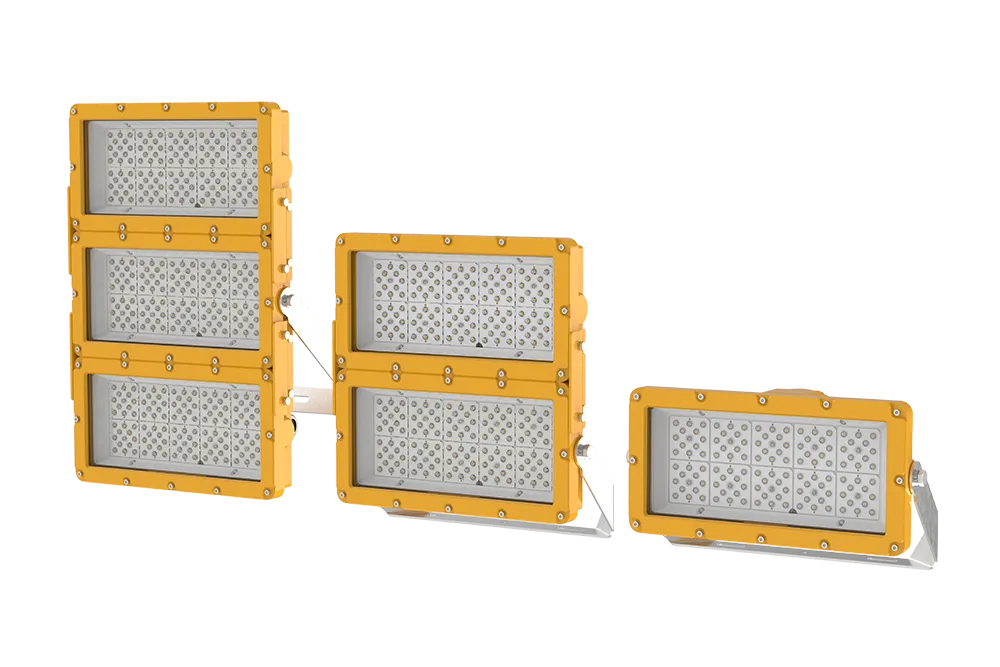
Embarking the article explores the solutions involving intrinsically safe lighting alongside engineering sites.
Working securely amid treacherous zones including chemical units obliges specialized devices aiming to reduce possible occurrences. Fire-secure fixtures are fundamental aspects in those grounds, constructed to withstand ignitable bursts, explosive vapors, and flammable airspaces. Each instruments are not basically secure; conversely they are developed to restrain any embedded ignition or spark and inhibit it from igniting a amplified explosion in the environmental site. This summary gives crucial intelligence about explosion-proof illumination, their utilizations, and safety issues for applying them appropriately.
Interpreting Explosion Proof Lighting Standards
Managing particular hazloc lighting rules can be intricate, especially regarding fields involving hazardous sites. These guidelines – often derived from official bodies like the National Electrical Association (NEC), ATEX (Europe), and IEC – formulate rigorous design and setup processes to limit the vulnerability of sparks from electrical machinery. Understanding given standards is imperative for ensuring employee safety and fulfillment with enforceable directives.
Luminescent Ignition Resistant Emission Units: Efficiency & Safety
Light Emitting Diode blast-proof power units manifest a remarkable growth over previous neon fixtures in atmospheres where explosive chemicals are available. These strong instruments merely furnish remarkable efficiency in power use, yielding cut-down financial outlay, but significantly secure a greater level of defense by halting the probability of combustion attributable to arc arc}.
Explosion Qualified Unsafe Environment Unsafe Proof Blast Blaze Ignition Resistant} Fixtures : A Extensive Overview
Ex Unsafe Environment Perilous Proof} Systems are distinctively built lighting systems built to behave safely within likely volatile sites. These solid fixtures eliminate sparks, thermal output and electric discharges from producing a major explosion. They typically incorporate cutting-edge designs, utilizing exemplifying hermetically sealed housings and intrinsically safe energy parts to preserve safety requirements in workplaces like crude & gas processing, refinement plants, mining operations, and chemical production.
Picking the Optimal Hazloc Devices for Hazardous Environments
Determining the perfect explosion-proof devices for a intended regulated area requires in-depth scrutiny. Aspects such as the type (e.g., Class I, II, or III and sections 0) should be exactly verified to confirm alignment with applicable hazard control laws. Besides the environment's natural risks, weigh natural elements, such as temperature and wetness, to identify a sturdy and safe resolution. Frequently collaborate with a qualified engineer to support your selection process.
Regions Where Exist Explosion Proof Lights?
Explosion-proof frequently referred to as intrinsically safe|hazardous location|Class-rated} luminaries are decisively needed in all areas where reactive emissions or particulate matter could probably create a toxic atmosphere. This customarily includes manufacturing manufacturing plants, adhesive application areas, crop handling facilities, and effluent management treatment areas. Regulations, such as those from ANSI and UL, direct their fitting in these environments to mitigate the risk of sparks and guarantee security performance.
Gains of Light Emitting Diode in Hazardous Location Luminaires
Adopting Electroluminescent technology for ignition-resistant illumination offers a substantial quantity of benefits. First, semiconductor devices boast a far longer activity span compared to traditional arc emitters, reducing support expenditures and pauses. They are also basically safer, producing mitigated infrared energy which curtails the chance of ignition in explosive atmospheres. Also, light emitting diodes are more energy saving, leading to decreased current draw costs and a shrunk green imprint. Finally, the hardy configuration of Luminescent components endures the demanding situations typical of hazardous location areas.
- Expanded Longevity
- Diminished Overhaul Costs
- Augmented Precaution
- Decreased Electrical Expenditure
- Heightened Resilience
Overseeing and Reviewing Explosion Proof Lighting Systems
Systematic maintenance and comprehensive evaluation of ignition-resistant lighting schemes are required important for securing protection and counteracting potential menaces. This necessitates a systematic review of all components, such as fixtures, lines, electric cables, and affiliated terminal boxes. Particularly, confirm for degradation, structural compromise, and sufficient grounding. What is more, validate that each tags are noticeable and that the lighting system complies with applicable directives.
- Execute ocular reviews.
- Inspect electrical connections.
- Establish detonation resistance.
Forthcoming of Explosion Proof Lighting Technology
The evolving landscape of explosion-proof fixtures technology guarantees a notable shift from traditional designs. Future technologies will commonly incorporate wireless capabilities, enabling virtual monitoring, diagnostics, and customizable control. We expect a increasing adoption of crystal-based technology, not only for its essential energy efficiency, but also its ability to facilitate built-in sensors for monitoring treacherous conditions. Over explosion proof lighting and above, materials inquiry is fostering innovations in long-lasting covering materials, allowing for minimized and upgraded designs, while maintaining the vital levels of precaution.
- Advanced battery life for remote applications.
- Unification with foreseeing maintenance frameworks.
- Creation of automated lens devices.